Tree Removal in Franklin, TN

Removal, stump grinding, storm response and ANSI A300 pruning across Franklin and Williamson County, backed by more than twenty years of Middle Tennessee tree work.

Franklin Tree Removal has worked on Middle Tennessee trees for more than twenty years, and the work in Franklin, TN runs through a short list: whole-tree removal, stump grinding, trimming and pruning, emergency storm response, land clearing, tree disease and plant health care, and the permit questions attached to all of it. We take down the trees that need to come down, and we say so plainly when one does not. Every estimate is free, on residential and commercial property alike.

Two things shape tree work in this city more than anything else, and both are underfoot. The bedrock is Nashville Group limestone, and Williamson County’s own soil-mapping regulation records depth to rock in inches by soil series: Talbott at 20 to 22 inches on gentle slopes, and Rockland defined as ground where 50 to 90 percent of the surface is exposed rock. A stump grinder rated to cut 12 to 16 inches below grade is near refusal on the first and sitting on the second, which is why we probe a stump before quoting a grind depth rather than after.

The second is the ordinance. Franklin requires a tree removal permit on commercial, industrial and multifamily lots of any size and on single-family lots larger than one acre, and Section 17.2.1 exempts a tree with written verification of its condition as dead, dying or structurally unsound. Brentwood, Forest Hills and Oak Hill each answer the same question their own way. We read the rule that covers your address before the saw comes out, because in this city no building or grading permit is released until tree removal compliance or exemption is documented.

Get Your Free Quote

Fast response • No obligation

So we can reach you about your request.

So we can send you a confirmation after you submit this inquiry form.

  • 20+ Years in Middle Tennessee
  • Free Estimates
  • Written Scope Before We Start

What we do

Our Services

Tree removal and arborist work in Franklin, Tennessee

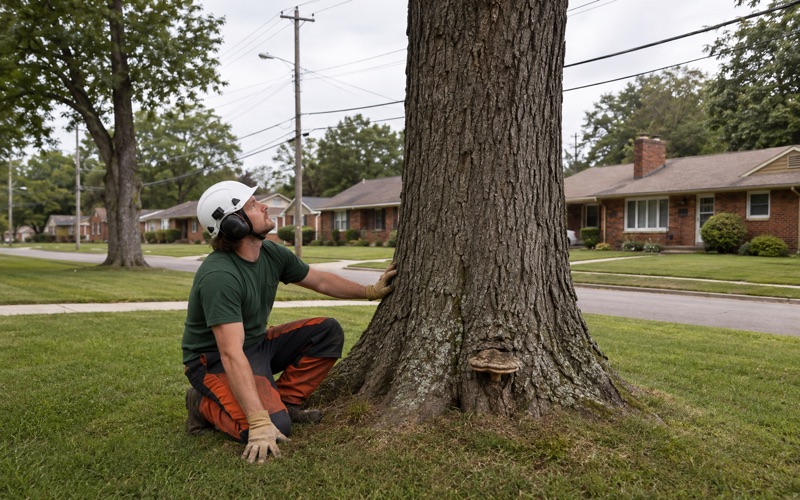
Worker crouched at the root flare of a mature northern red oak in Franklin, reading a shelf fungus at the base of the stem.

Arborist

Tree risk assessment and arborist reports in Franklin, TN, documenting condition, defects and root plate in writing.

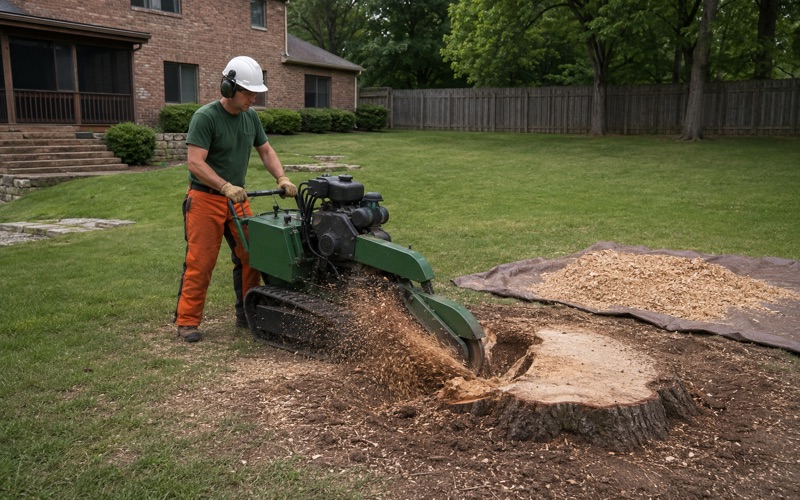
Worker sweeping a tracked stump grinder across the face of an eastern red cedar stump in Franklin, pale limestone showing at the rim of the hole.

Stump Grinding

Stump grinding and stump removal in Franklin, TN, with grind depth probed against local depth to rock before the quote.

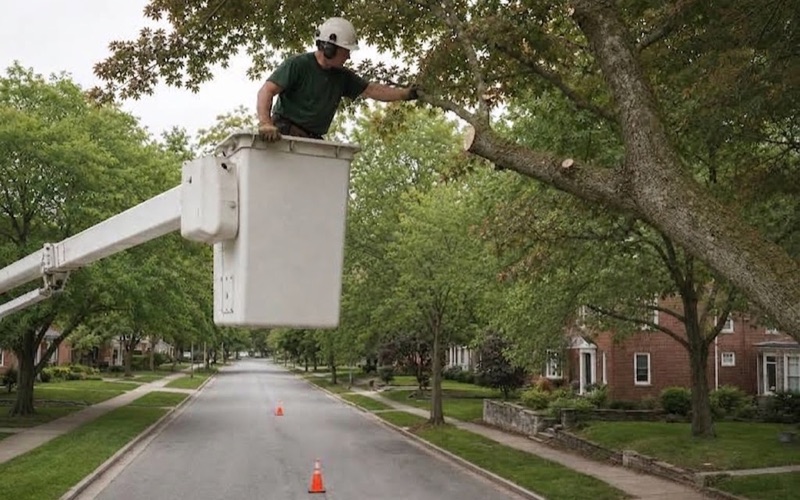
Worker in an aerial bucket making a reduction cut at the branch collar of a red maple over a Franklin street.

Tree Trimming

Tree trimming and pruning in Franklin, TN to ANSI A300 objectives and cut types: crown cleaning, raising, reduction and thinning, never topping.

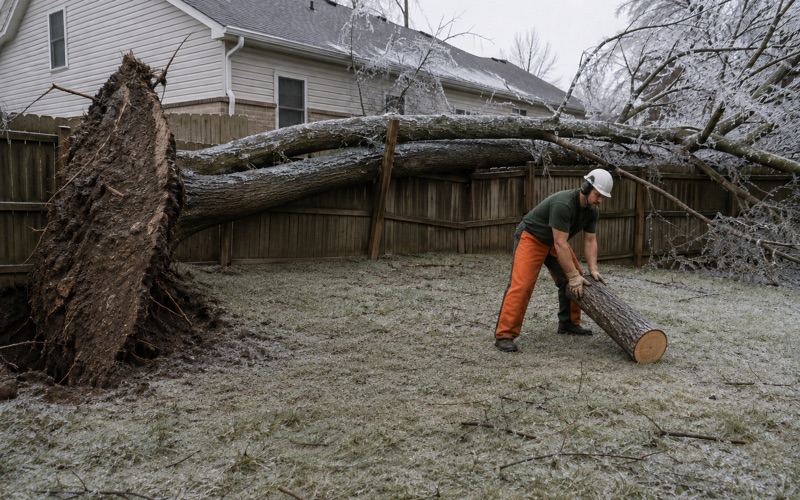
Worker at the butt of a windthrown silver maple that came down across a Middle Tennessee back fence under ice, its root plate lifted clear of the lawn.

Emergency Tree Removal

Emergency and storm tree removal in Franklin, TN: trees on a house, ice-broken limbs, blocked drives and wind-thrown trunks.

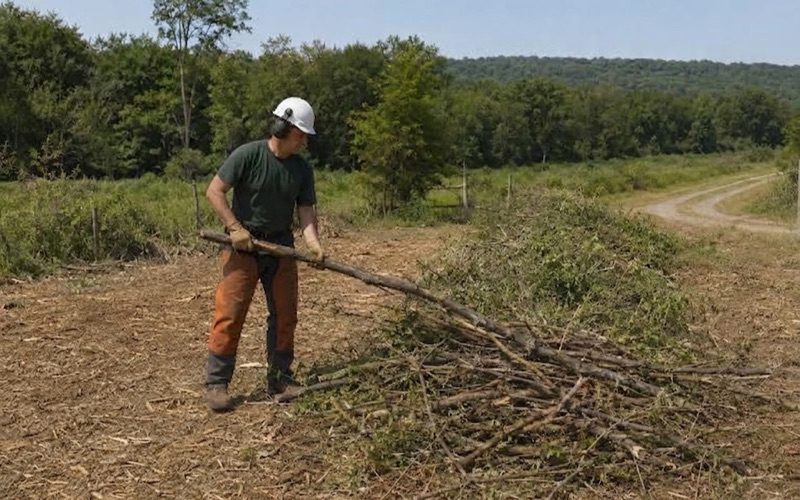
Worker rolling a honey locust cull log onto the windrow on a Franklin acreage clearing job, the mulcher parked with its grapple closed behind him.

Land Clearing

Land clearing and forestry mulching in Franklin, TN: fence lines, pasture reclamation, understory by the acre and building site prep.

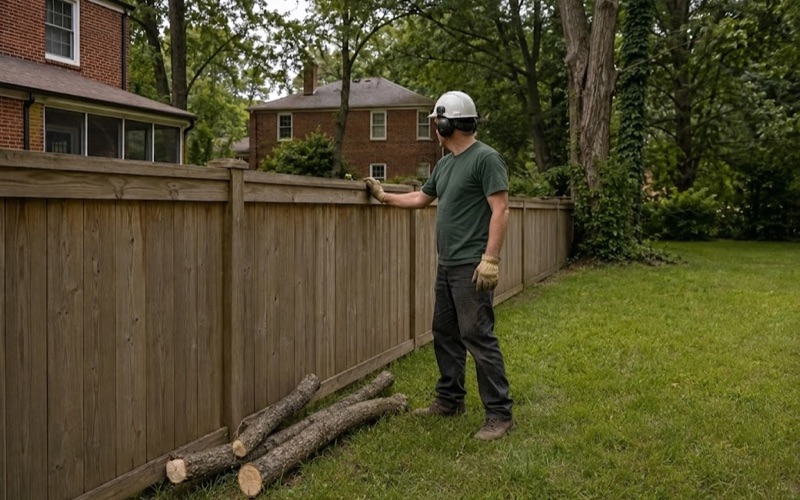
Worker at the boundary fence in Franklin with a black walnut limb cut back to the property line, the stubs stopped clean at the collar.

Tree Removal Permit

When Franklin requires a tree removal permit, which lots are exempt, and how the neighboring cities answer the same question.

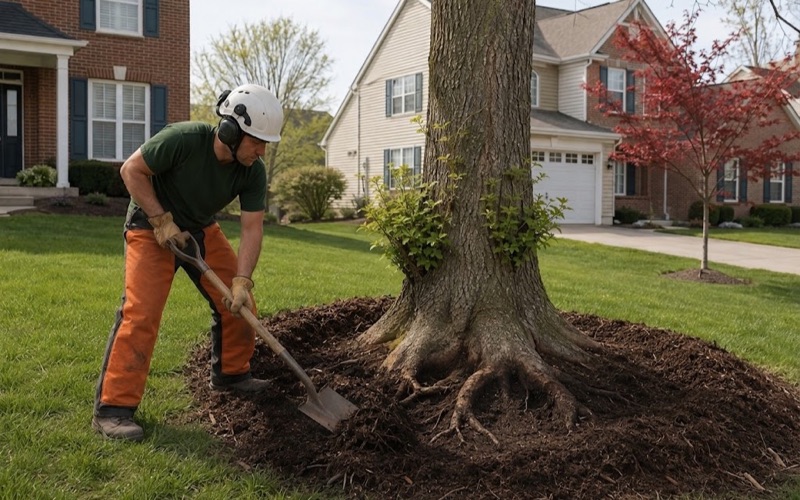
Worker pulling piled mulch back off the root flare of a declining white ash in Franklin, opening the root collar to the air.

Tree Disease Treatment

Tree disease treatment and plant health care in Franklin, TN, starting with a diagnosis rather than a spray schedule.

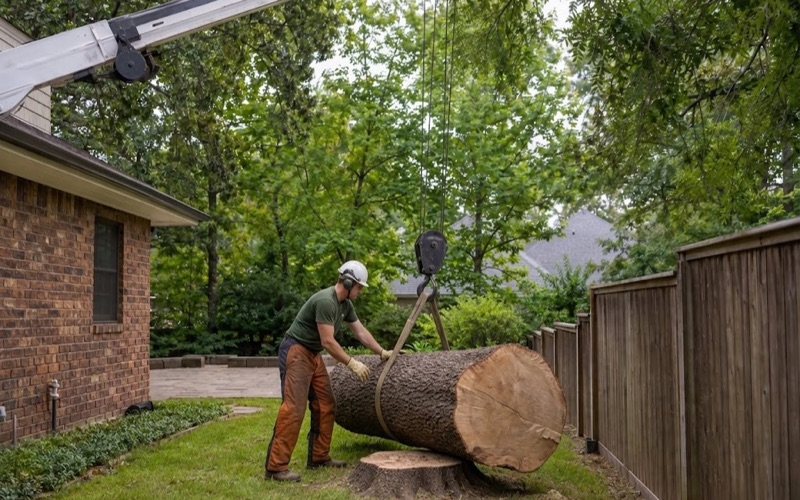
Worker setting the choker on a black oak section in a tight Franklin back yard, the crane hook block already lowered to it.

Crane Tree Removal

Crane-assisted tree removal in Franklin, TN for trees over a roof, brittle dead wood and lots with no safe drop zone.

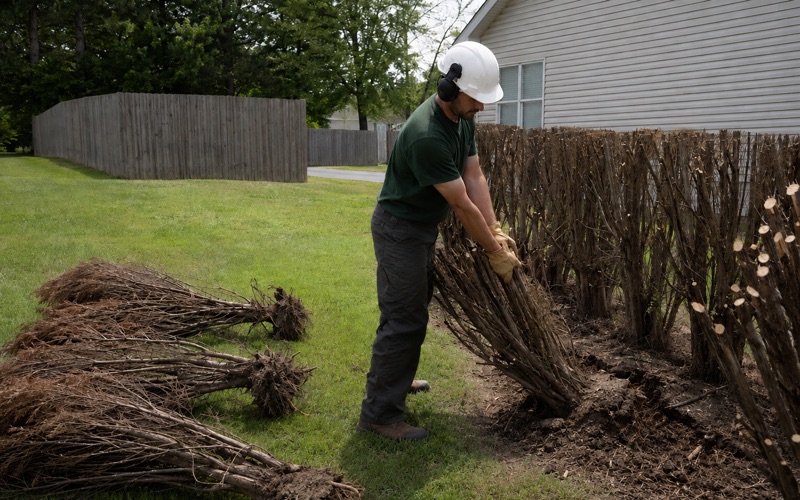
Worker pulling a Leyland cypress stem cluster out of a failed screen planting in Franklin after the tops have been taken off.

Brush Removal

Shrub, hedge and brush removal in Franklin, TN: overgrown plantings, fence lines and invasive thickets, chipped and hauled.

Two Decades of Tree Work in Middle Tennessee

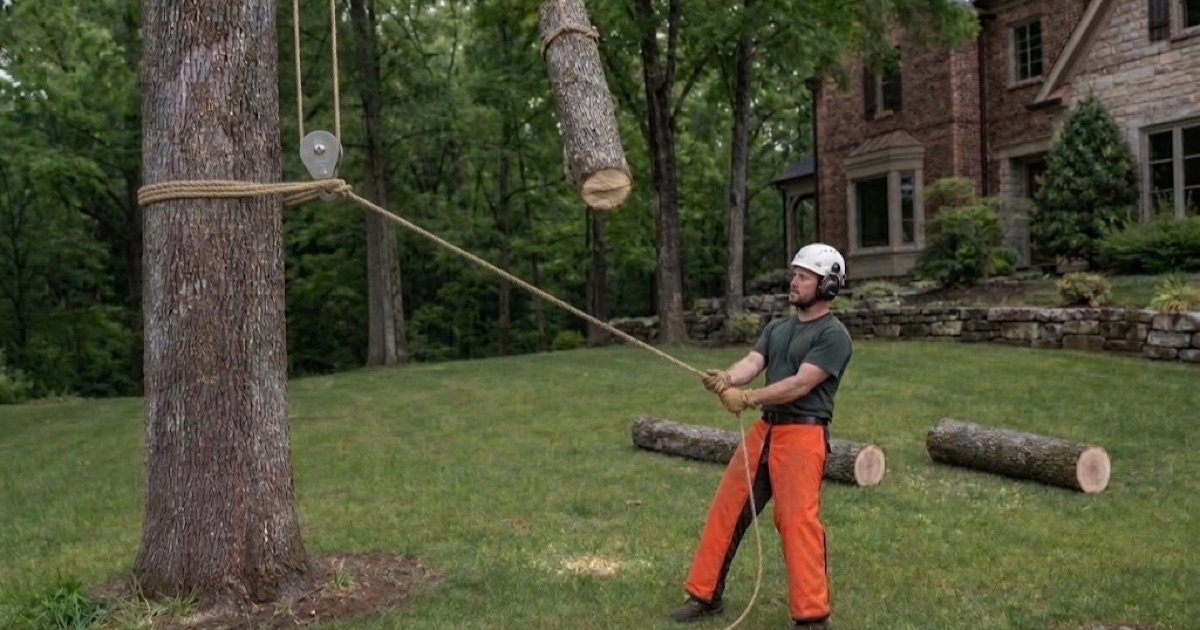
Worker at the base of a white oak spar in a Franklin back yard, hands on the lowering rope with three wraps on the device as a cut section comes down.

More Than Twenty Years on Both Sides of the Metro

We have been climbing, rigging and grinding here for more than twenty years, on the Nashville Basin side where thin soil sits over limestone and on the Western Highland Rim side where the ground drains differently and the stands are mixed differently. That span covers ice storms, straight-line wind events, an emerald ash borer wave that changed what a mature ash is worth, and a county that has kept building on wooded lots the entire time. It is why we quote from what a species and a site actually do in Williamson County rather than from a national average.

Why Choose Franklin Tree Removal

Depth to Rock Checked First

Every stump quote here starts with a probe, because the county’s own regulation maps Talbott soils at 20 to 22 inches to rock and Rockland at 50 to 90 percent exposed surface rock, so you get a grind depth we can actually reach rather than a standard promise that meets limestone halfway down and turns into a change order in the middle of the afternoon.

The Ordinance Read Before the Saw

No tree on our schedule is cut before we have checked which rule covers the address: Franklin’s one-acre single-family threshold, its critical-lot designation for specimen trees, or the separate answers Brentwood, Forest Hills and Oak Hill give. That is what keeps a removal from becoming mitigation planting at two caliper inches for every inch taken, rather than a discovery made after the stump is already ground.

Thirty-Five-Inch Gate Access

Our compact tracked equipment passes through a thirty-five-inch side gate and works in a back yard on its own tracks, so a mature tree behind a house does not automatically become a crane setup with a street closure attached, rather than a bid padded for machinery that was never going to be needed on that particular lot.

Crane and Rigging Capacity

Older lots around Franklin carry canopy that outgrew the yard planted under it, and we keep crane, spider lift and mechanical lowering-device capacity for exactly those trees, so a limb suspended over a roof is picked and set down under control rather than dropped and hoped for the way an under-equipped crew is forced to work.

Written Scope Before We Start

Every proposal states in writing what leaves the property and what stays behind: the stump, the trunk rounds, the grindings and the chips. Disposal is a real cost here, since the Williamson County Landfill charges brush by the ton, so settling it on paper beforehand beats negotiating it in a driveway next to a loaded truck.

Pruning Worked to ANSI A300

Never a topping cut. Every pruning job is written to the objectives and cut types the ANSI A300 standard defines, and every crew works to the ANSI Z133 safety requirements, which matters more here than in most places because Franklin’s ordinance treats excessive pruning and topping as violations requiring mitigation rather than as a difference of opinion about appearance.

Emergency and Storm Tree Work

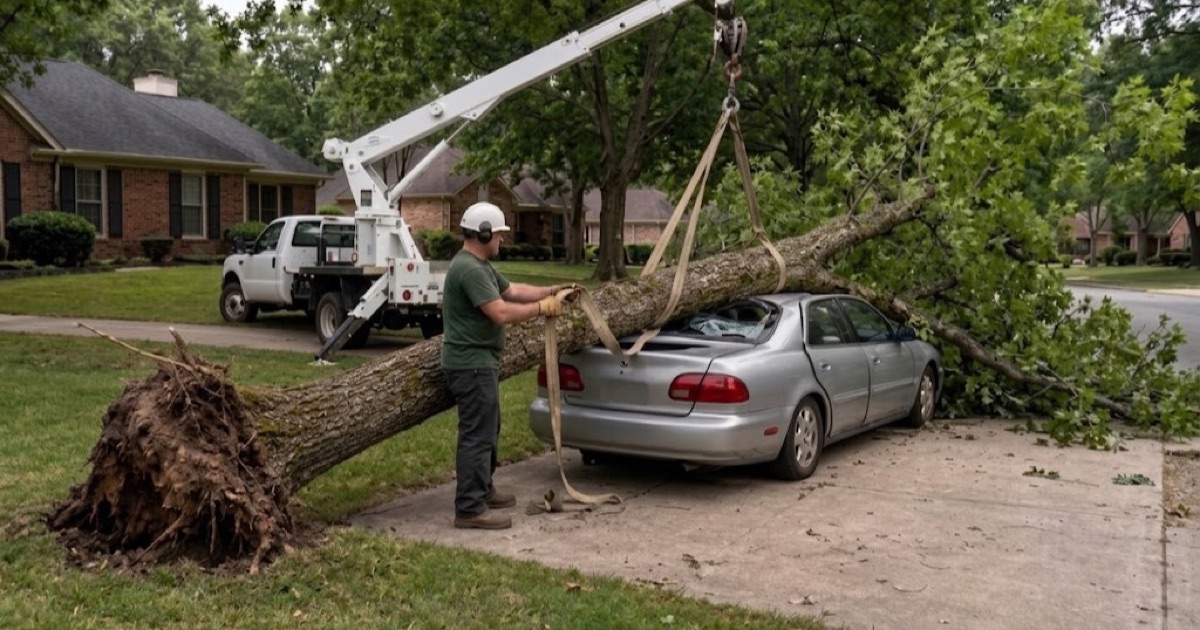
Worker passing a sling around a fallen black locust resting on a sedan in a Franklin driveway, the lifting line still slack in the white oak overhead.

Emergency Removal of a Tree on the House

A tree resting on a roof is a loaded structure, not a fallen one: the trunk is often the only thing holding the remaining weight off the framing. We stabilize before we cut, rig the sections off in an order that unloads the roof progressively, and cut the load-bearing piece last. That sequence is what keeps a repairable rafter line from becoming a collapsed one during the removal itself.

Ice Storm Limb Failure and Hanger Removal

Ice loading is the storm mode that produces most of the failure work in this metro. Winter Storm Fern, which moved through beginning Saturday January 24, 2026, left close to 15,000 outages across Williamson County by the end of that weekend, about 2,000 of them in Franklin. We clear the broken limbs and the hangers still lodged in the canopy, which are the pieces that come down on the second warm day rather than during the storm.

Trees on Power Lines: Call the Utility First

If a tree is touching a conductor, the first call is to Middle Tennessee Electric, not to us. Only line-clearance qualified crews may work inside the approach distances around an energized line, and the utility keeps certified arborists on staff for exactly this. We take the tree once the line is de-energized or cleared, and we handle everything outside the utility’s easement.

Lifting a Fallen Tree Off a Vehicle

A trunk across a car is usually a rigging problem rather than a cutting problem, because sectioning it in place drives glass and metal further into the body. We set a lowering device or a crane pick, take the weight off the vehicle first, and cut afterward. We also photograph the position before anything moves, which is the record an adjuster asks for later.

Straight-Line Wind and Tornado Cleanup

Straight-line wind lays trees over in one direction and leaves the survivors with root plates already lifted at the soil interface. Our first pass is a walk of the whole property looking for exactly that, because a leaning tree with a cracked plate is the one that comes down a week later on a calm day. Then we clear, section and haul the failures in the order that reopens access.

Clearing a Blocked Driveway or Road

Access work is triaged ahead of cosmetic cleanup. We cut a lane through the trunk first, move the sections clear of the travel way, and come back for the stump and the fine cleanup on a scheduled visit. Where a trunk crosses a public right-of-way, we coordinate the clearance rather than pushing debris into it, since the city has its own rules about what may be stacked there.

Why a Crew Stands Down in Live Wind and Ice

The ANSI Z133 safety requirements govern when aerial work stops, and high wind, ice-loaded limbs and energized conductors are all reasons a competent crew waits. A saw operator in a bucket beside a swinging limb is not being cautious by declining; he is following the standard the whole trade works to. We would rather tell you the truth about the window than take a job that ends with an injury on your property.

What a Homeowner Policy Covers After a Tree Falls

Coverage usually turns on what the tree struck and on whether the tree was documented as failing beforehand, which is why a written condition record matters after the fact as much as before it. We photograph the root plate, the fracture surface and the wood condition as we work, and hand it over with the invoice. Then we give you a straight read on whether the repair is worth a claim after the deductible.

Tree Removal, Permits and Property Lines

Worker at the base of a specimen shagbark hickory on a Franklin building lot, the tree protection fence already set out ten feet from the trunk.

When Franklin Requires a Tree Removal Permit

A tree removal permit is required in this city on commercial, industrial and multifamily lots of any size, and on single-family lots larger than one acre. It is not required on a single-family lot of one acre or less that is not designated a critical lot. Building and Neighborhood Services issues it after review by Planning and Sustainability and the City arborist, and we tell you which side of that line your address falls on before we schedule.

The Arborist Condition Letter and Section 17.2.1

Section 17.2.1 exempts several removals from the tree protection standards outright, and the one that matters most on a distress call is a tree determined unhealthy by the Department of Planning and Sustainability, or with written verification of its condition as dead, dying or structurally unsound prepared by a certified arborist. Nuisance trees, trees threatening a structure or an underground utility, and removals during weather emergencies are exempt as well. We document condition in writing so the paperwork route is open to you.

Tree Removal on Lots Larger Than One Acre

Once a single-family parcel passes one acre, the permit requirement attaches regardless of how ordinary the removal looks, and Section 17.2.4 sets a minimum canopy retention percentage that scales with the zoning district and with how much canopy the site already carries. In the R1 column that runs from 15 to 26 percent across the bands. We map what is coming out against what has to stay before anything is felled.

Permit Rules in Brentwood, Forest Hills and Oak Hill

The four cities in this part of the county do not share one answer, and assuming they do is the most expensive mistake a homeowner makes here. A removal that needs nothing in one jurisdiction can need a review, a replacement planting, or a condition letter a mile away. We check the ordinance for the specific address, every time, rather than applying the rule from the last job.

Tree Service Licensing in Tennessee

There is no trade-specific tree care or arborist license in Tennessee. A state contractor license is required at $25,000 or more in materials and labor, and the Tennessee Home Improvement license applies only in counties that adopted it, which Williamson County has not. The credential a homeowner can actually check here is ISA certification, which is what the state Division of Forestry recommends and what the ordinance itself names for critical root zone work.

Overhanging Limbs From a Neighbor’s Tree

A limb crossing the property line is the single most common dispute we are called into, and it is usually resolvable without lawyers. The practical question is where the cuts can be made without destabilizing a tree that belongs to someone else. We prune to proper cut positions at lateral branches rather than flush to the line, and we put the scope in writing so both households are reading the same document.

Pruning Back to the Property Line Without Killing the Tree

Cutting every branch flat at an imaginary vertical plane removes leaf area unevenly and leaves stubs that decay inward toward the trunk. The A300 approach is different: reduce the offending limbs back to appropriate laterals so the remaining structure still supports itself. That usually gets the clearance you wanted over the fence, driveway or roof, without producing the one-sided, hollowing tree that generates a second dispute in five years.

When a Neighbor’s Dead Tree Becomes a Liability

A healthy tree that fails in a storm is treated very differently from a tree whose decline was documented and ignored, which is why the paper trail is the whole game. We can inspect from your side of the line and put the visible indicators in writing: conks at the root flare, a dead crown, a lifted root plate. A dated written record delivered to the owner changes what happens if the tree does come down.

Tree Protection Zone Fencing on Construction Sites

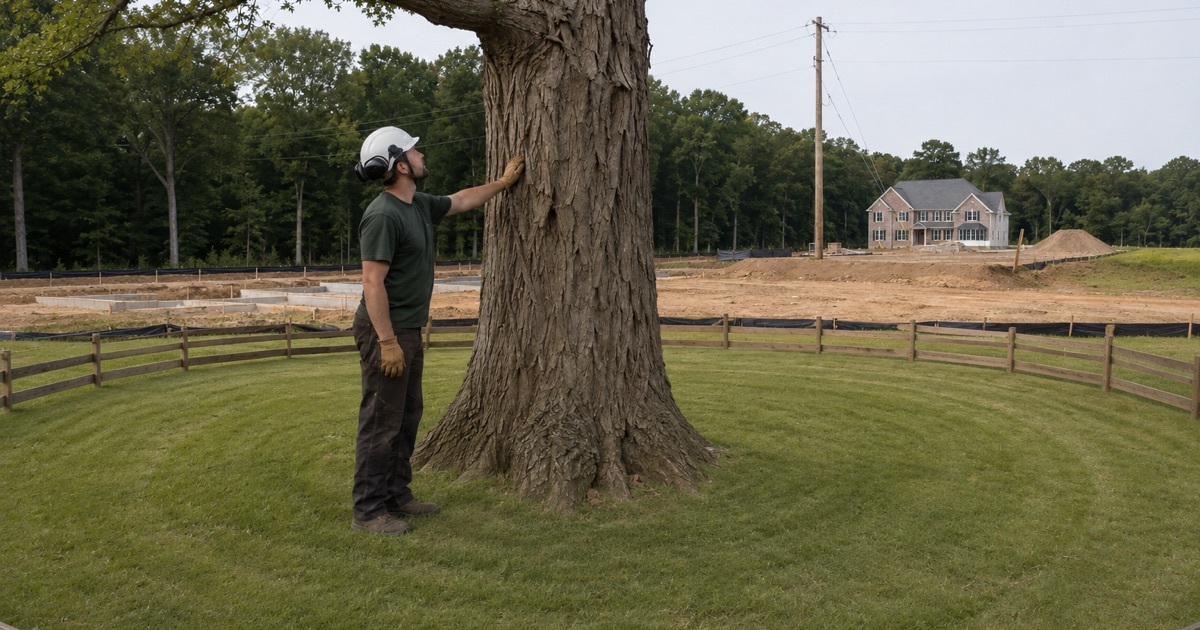
Franklin specifies construction protection in detail. Fencing must encircle protected specimen trees before land disturbance begins and extend at least one foot from the tree for every inch of diameter at breast height, with a minimum of ten feet from the trunk, four-foot chain link with posts no more than ten feet apart, and bilingual TREE PROTECTION ZONE KEEP OUT signs at least every 150 linear feet at a minimum of two feet by two feet. We install to that spec so the inspection is not what stops your grading.
Trimming, Pruning and Tree Health

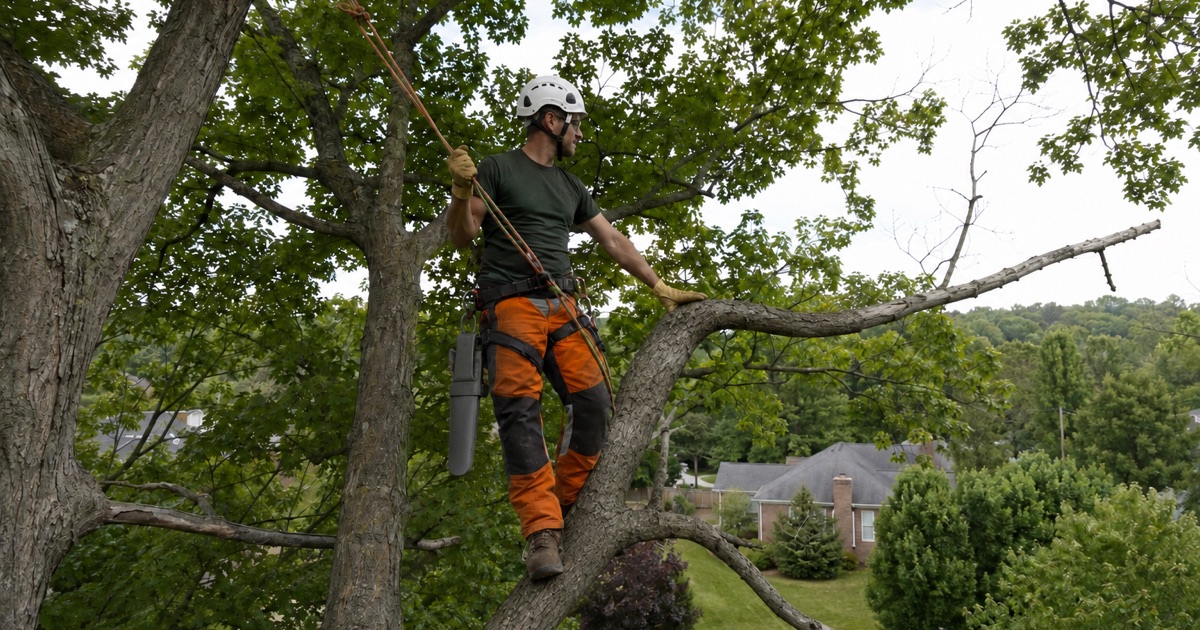
Climber high in the crown of a sugar maple over a Franklin back yard, tied in above the limb he is clearing of deadwood.

Crown Cleaning, Raising, Reduction and Thinning

These are four different jobs and the words are not interchangeable. Crown cleaning removes dead, diseased and broken wood; crown raising lifts the lowest limbs for clearance over a drive or walk; crown reduction shortens the outer canopy back to laterals; crown thinning selectively removes interior branches to move light and air. We name the objective in the proposal, because a quote for the wrong one buys you a tree that still does the thing you wanted stopped.

Why We Do Not Top Trees

Topping cuts a canopy back to stubs, removes the leaf area the tree is living on, and forces a flush of weakly attached regrowth that fails under the next ice load. It also reads as a violation here: the ordinance lists excessive pruning and tree topping as violations requiring mitigation. Where a tree is genuinely oversized for its space, crown reduction to proper laterals is the service that solves it and keeps the tree structurally sound.

Cabling and Bracing for Co-Dominant Stems

A tree that forks into two competing leaders with included bark between them has a weak union that pulls apart in a wind or ice event, often taking half the canopy and whatever is beneath it. Supplemental support hardware, installed at the right height and tension, spreads that load between the stems. It is a maintained system rather than a permanent fix, and it is frequently the difference between an inspection every few years and a removal now.

Deadwooding Mature Shade Trees

The large white oaks, tulip poplars and sugar maples over Franklin patios and drives shed dead limbs on their own schedule, and gravity picks the timing. Deadwooding removes that material on purpose, from a climbing line or a lift, before it comes down on a car or a walkway. On a mature shade tree it is usually the single highest-value pruning visit, because the risk it removes is concentrated in a few identifiable limbs.

Emerald Ash Borer and Brittle Ash Removal

Ash killed by emerald ash borer does not behave like other dead hardwood. It goes brittle quickly, sheds bark, and fails without warning under a climber’s weight, which is why a dead ash is a lift or crane job rather than a climb once it is past a certain stage. We assess ash on condition rather than on calendar, and we say plainly when the window for a straightforward removal has already closed.

Conks and Decay at the Root Flare

A mushroom or a shelf-like conk at the base of a trunk is fruiting body evidence that decay is already established in the wood behind it, and the root flare is the worst place on the tree for that to be true. We excavate enough to see the flare, sound the base, and assess how much intact wood is left holding the tree up. That inspection is what separates a tree that needs monitoring from one that needs to come out.

Root Collar Excavation and Soil Decompaction

A trunk buried by fill or mulch keeps moisture against bark that was never meant to hold it, and compacted ground over a root zone starves roots of the air they need. Air spade work removes the soil without severing roots, exposes the root collar so it can dry, and loosens compacted profiles around the drip line. On a declining but structurally sound tree it is often the treatment that reverses the trend.

Spotted Lanternfly and Tree of Heaven Control

Tree of heaven is the preferred host for spotted lanternfly, and it is also an aggressive invasive that resprouts hard from the roots if it is simply cut. Removing it properly means treating the stump and the root suckers rather than just felling the stem. On sites where it has taken hold along a fence line or a creek bank, that treatment is what keeps you from clearing the same thicket every year.

Stumps, Debris and Land Clearing

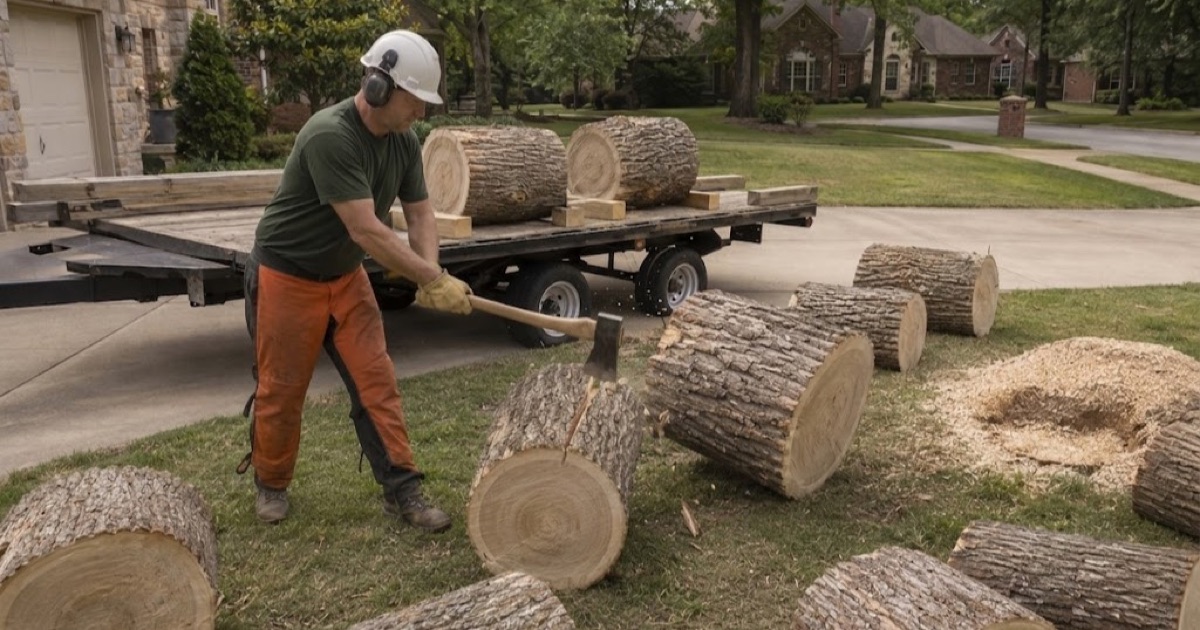
Worker rolling a tulip poplar round up onto the log bunk of a trailer at the end of a Franklin job, the ground stump and its grindings behind him.

Stump Grinding Versus Excavating the Root Ball

Grinding chews the stump and the major surface roots into chips in place, leaving a hole full of grindings and no disturbance around it. Excavation pulls the whole root ball out and leaves a crater, torn adjacent roots and a repair problem in a finished lawn. Grinding is the right answer for almost every residential stump; digging is for cases where the ground itself has to be cleared to depth for construction.

How Deep a Stump Grinder Actually Cuts

Machines in this class reach roughly 12 to 16 inches below grade, which is deep enough for turf, for most landscape planting, and for a patio or walk that will not be structural. It is not deep enough to remove every root a tree ever grew. We tell you the depth we can hit on your particular ground before you decide what goes in the hole afterward.

Hitting Limestone Under the Stump

This is the local complication. Williamson County’s soil regulation names five common subsurface rock scenarios, including pinnacle and trough, where rock pinnacles stand beside troughs three feet or more deep, and floaters, which are random buried blocks a probe can miss entirely. A tracked stump grinder finds them the hard way. We probe first, price honestly, and tell you when a surface ledge caps the depth we can reach.

Where the Grindings Go

A ground stump produces a surprising volume of chips, considerably more than the hole it came out of. The default is to rake them back and crown the spot, which settles over a season. If you want soil and turf instead, the grindings have to be hauled and the hole backfilled, and that is a separate line on the proposal rather than something we assume either way.

Hauling the Trunk Rounds and Brush

A felled hardwood leaves two very different piles: brush that goes through the chipper, and trunk rounds that do not. The county landfill takes brush at a per-ton rate at its Pinewood Road site, and since May 4, 2026 the resident free-tonnage allowance has been suspended, so hauling is a real cost we price rather than absorb quietly. Convenience center brush intake is now capped at three feet in length, which rules out self-hauling a trunk.

Keeping the Wood for Firewood

Plenty of customers want the trunk left, and that is easy to arrange if it is decided before the truck is loaded. Tell us the length you burn and we cut rounds to it on site. Oak and hickory are worth stacking and will still need a year or more to season; ash killed by borer is drier already, and Callery pear and Leyland cypress are generally not worth the space they take up.

Overgrown Fence Line and Right-of-Way Clearing

A fence line that has not been touched in a decade is rarely just brush. It is usually volunteer eastern redcedar, hackberry and tree of heaven grown up through the wire, plus vines that have to be cut off the posts before anything can be pulled. We clear to the line, treat the stumps that would resprout, and leave a boundary that a fence contractor can actually work along.

Forestry Mulching and Site Prep by the Acre

On acreage, a forestry mulcher takes standing understory and small-diameter stems down to a mulch layer in a single pass, with no burn pile and no debris to haul off. It is the efficient way to open a pasture edge, reclaim a wooded corner, or prepare a building site, and it is priced by the acre and the stem density rather than by the tree. Larger trees are still felled and handled separately.

Areas We Serve

Franklin Tree Removal provides tree removal throughout the greater Franklin area, with the same crews and the same standards on every job.

Good to know

Frequently Asked Questions

What does tree removal cost in Franklin?

Price follows the work, not the tree. The variables that move a quote here are access, height and spread, what sits under the drop zone, whether the stump is included, and how much of the wood leaves the property. A tall hardwood over a roof with no equipment access costs multiples of the same tree standing alone in an open side yard. We walk the site, price the specific job in writing, and the estimate itself is free.

How soon can you get here after a tree comes down?

Storm calls are triaged rather than queued. A tree resting on a house, blocking the only way out of a driveway, or holding tension over a walkway moves ahead of scheduled pruning. After a county-wide event, the honest answer is that everyone in the trade is working through a backlog at once, so we tell you a real window instead of a comforting one, and we secure the immediate hazard first when the full removal has to wait.

Does a tree service have to be licensed in Tennessee?

There is no trade-specific tree care or arborist license in Tennessee. A state contractor license is required at $25,000 or more in materials and labor, and the Home Improvement license applies only in counties that adopted it, which Williamson County has not. That leaves insurance and ISA certification as the things a homeowner can actually verify, which is why the state Division of Forestry points people toward ISA certification rather than toward a state tree license that does not exist.

Do I need a permit to remove a tree on my own property?

In Franklin, a tree removal permit is required on commercial, industrial and multifamily lots of any size and on single-family lots larger than one acre. A single-family lot of one acre or less is exempt unless it is designated a critical lot, which happens when the lot carries a specimen tree on the final plat. Permits are issued by Building and Neighborhood Services after review by Planning and Sustainability and the City arborist.

How deep do you grind a stump?

Deep enough to plant or pave over, when the ground allows it. Machines in this class cut roughly 12 to 16 inches below grade, and Williamson County soils are mapped at 20 to 22 inches to rock on a Talbott series, less on the shallow units. We probe before we quote so the depth in the proposal is a depth we can reach, and we tell you up front when a surface ledge caps it.

What happens to the wood, the brush and the grindings?

Whatever the written scope says, which is why we settle it before the truck arrives. Brush goes through the chipper, trunk rounds are hauled or left cut to a length you asked for, and grindings are either raked back into the hole or removed. The county landfill charges commercial loads by the ton, so hauling is a real line item rather than a rounding error, and pricing it openly beats discovering it in the driveway.

Will you tell me if a tree does not need to come down?

Yes, and often. A co-dominant stem with included bark can frequently be cabled or braced. A tree that looks dangerous because it dropped deadwood over a patio usually needs crown cleaning rather than removal. What changes the answer is decay at the root flare, a shallow root plate over rock, or structural loss that pruning cannot correct, and we will say which one we are looking at.

Is a fallen tree covered by homeowner insurance?

Coverage generally turns on what the tree hit rather than on the tree itself, and a healthy tree brought down by wind is treated differently from a documented dead one that had been left standing. We photograph the failure, note the condition of the wood and the root plate, and put it in writing. Then we give you a straight read on whether the job is worth a claim once the deductible is subtracted.

Do you top trees?

No. Topping removes the leaf area a tree lives on and forces weakly attached regrowth that fails in the next ice load, and Franklin's ordinance treats excessive pruning and topping as violations requiring mitigation rather than as a stylistic choice. Where a tree is genuinely too large for its space we use crown reduction to the objectives and cut types ANSI A300 defines, which shortens limbs back to appropriate lateral branches.

Can you get equipment into a fenced back yard?

Usually. Our compact tracked machines pass through a thirty-five-inch gate and work on their own tracks, which keeps a back-yard removal from turning into a crane setup and a street closure. Where the canopy genuinely exceeds what can be rigged down by hand, or where the drop zone is a roof, we bring crane and spider lift capacity instead, and the estimate says which one the job needs.

Ready to Get Started?

Request a free quote today and we'll get back to you fast.